In sessions we are often trying to ‘undo’ or improve on aches & pains (limitations) we have, whether it be through bad alignment or injury. Both of these are usually caused by having poor alignment resulting in our inability to maintain a sustainable functioning muscle balance.
If much of your day is spent sitting or sedentary your body will be cast into that shape, there will be adaptations which define your body as ‘a sitter’ – even if you did a ‘workout’ (whatever that may be). What you do for the majority of your day will dictate how your muscles are conditioned. There will be specific movement pathways that your lifestyle does not expose you to due to ‘modern living’ & in particular the time saving devices we now have at our disposal e.g shopping online instead of walking to the shops & carrying it home, buggies, washing machines, cars etc.
In order to counteract this we need to look at steps we can take to change our environments to afford more movement time, different working postures or movement breaks spread out across the day.
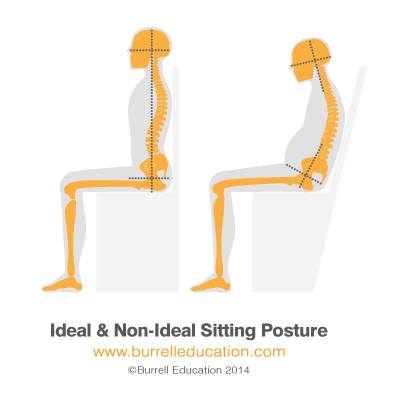 3 steps to improving your ‘sitters body’.
- Work on corrective exercises to help counter the effects of sitting.
- Try to sit & do the movement we’re already doing with better alignment. See the picture on the left for ideal sitting alignment.
- Look at ways we can change our environments & lifestyles to incorporate more activity where possible.
Take a look back at my post on 6 Ways to Stretch at Your Desk for some ideas on how to counter desk sitting.
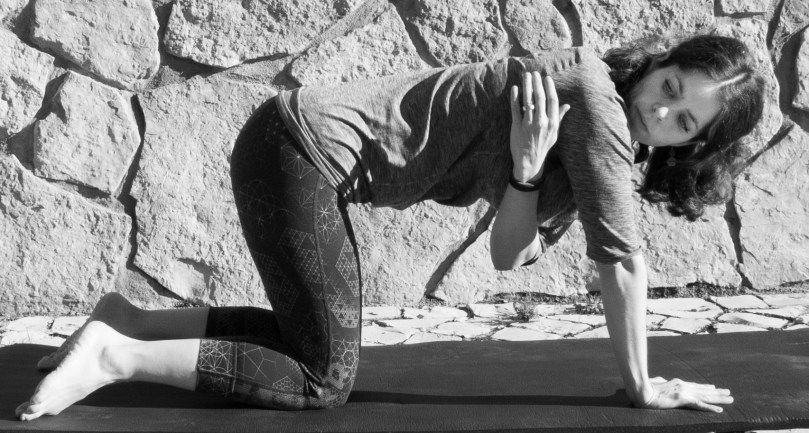

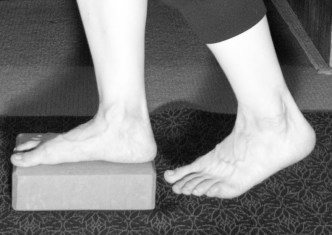 Your body uses your proprioception system to create an image of what is internal or inside the skin – in much the same way as a dolphin uses sonar or an animal uses it’s whiskers. Proprioception literally means ‘ones own perception’ & that information about change of skeletal position travels by our neurones to the brain to act on. The more muscle fibres you have firing & the more supple (not tight) the tissue, the better the proprioception.
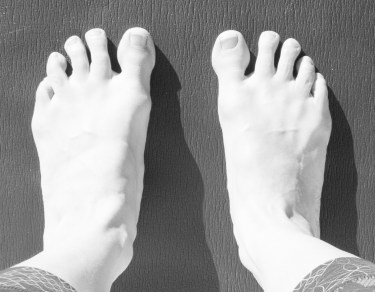 Stand with your feet pelvis width apart & check your feet are straight (as in the outside edges, see pic) – how does this feel? Any wobbles? Now close your eyes & see if there’s any difference with them open or closed. Maybe you felt you moved about more with your eyes closed – this is the ‘true’ part of the balance test – your eyes are not part of the sensory input we speak about when we mean whole-body balance, they are not part of the proprioceptive system they are part of the vestibular system (eyes & inner ears) but the poorer your proprioceptive system is the more you rely on your eyes to make corrections. So in order to stop the eyes doing all the work (& incurring eye muscle fatigue, dizziness & age-related changes in vision) you need to fix your body’s internal sensory input or proprioceptive system.

 Move With Jo